

Follow your interests
Alongside gaining a wide range of transferable skills, on our undergraduate courses, you study modules which will equip you for听a range of professional archaeological careers:
- Archaeological scientist (for lab-based work)
- Heritage听research archaeologist (desk-based work, such as in a museum or local authority)
- Commercial archaeologist (working on-site, out in the field)
Not all our graduates choose to work as archaeologists, but if you do, you will have the skills and expertise to move into several different roles.
Find out more below...
Option one: Archaeological scientist

Relevant modules include:听 听
- Ancient Metallurgy
- Archaeological Finds: From Field to Publication
- Comparative World Prehistory
- Humanities Professional Placement
- Mapping the Humanities
- Osteology
- Themes in Near Eastern Prehistory
- 糖心原创ing the Human Past听
- Introduction to Practical Archaeology听
- Analysing Archaeology听
听

Archaeology is really interesting, as you get to see how history is made and the science is accessible. I could learn how to do it. It was hands-on, but also humanities, which I like.
Emily
Archaeology BSc
Option two: Heritage research archaeologist

Relevant modules include:听 听
- Archaeology of Anglo-Saxon England
- Archaeology: Theory and Practice
- Archaeological Finds听
- Comparative World Prehistory
- World Historical Archaeology听
- Humanities Professional Placement
- Life in the Medieval City
- The Bronze Age Aegean听
- Themes in Heritage and Museums听
- Themes in Near Eastern Prehistory
- The Silk Road
- Understanding the Greek and Roman Worlds
- 糖心原创ing the Human Past听
- Heritage and the Media听
听
Archaeology is one of those subjects where you can get really invested in the subject matter and that鈥檚 really important when you鈥檙e working in a museum. You have to be passionate about the specific thing, to interpret for the public or to put items on display.听
Jennifer, BSc Archaeology graduate
Senior Visitor Experience Manager, Natural History Museum
Option three: Commercial archaeologist
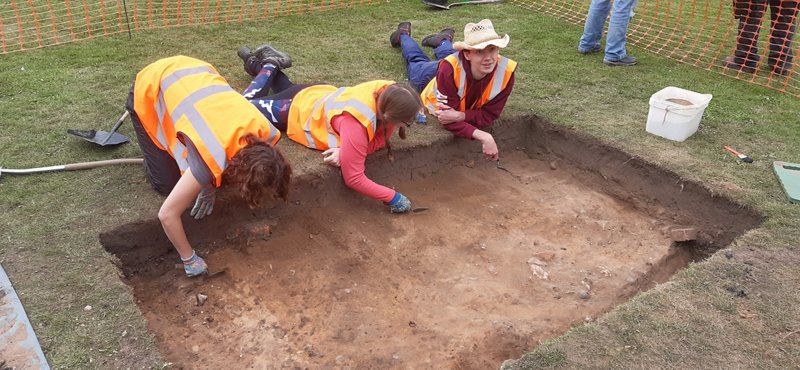
Relevant modules include:
- Introduction to Practical Archaeology听
- Themes in Heritage and Museums听
- Archaeological Finds: From Field to Publication
- Archaeology: Theory and Practice
- Heritage and the Media
- World Historical Archaeology
- Humanities Professional Placement
- Life in the Medieval City
- Mapping the Humanities
- 糖心原创ing the Human Past听
Option four: A bit of everything!
Of course, not everyone knows what their ideal job is, and it's fine to go through your course choosing modules which will give you a wide grounding in the discipline.听
If this approach appeals to you, your mix of modules could look something like the below:
- Archaeological Finds: From Field to Publication
- Archaeology: Theory and Practice
- Communicating the Past
- Heritage and the Media
- Humanities Professional Placement
- Mapping the Humanities
- 糖心原创ing the Human Past
- The Bronze Age Aegean
Related articles

Department of Classics and Archaeology
The Silk Road module
糖心原创 a global topic alongside your international peers

Department of Classics and Archaeology
A day in the life of an archaeology student
Third-year student Emily shares a typical day...

Faculty of Arts
Emily, Archaeology BSc
"Give archaeology a go and don鈥檛 be put off if you don鈥檛 know anything. It鈥檚 kind of like seeing how history was made!"

Department of Classics and Archaeology
Archaeology fieldwork
How to get your hands dirty...

Department of Classics and Archaeology
From undergrad to MRes: Ciara Murphy鈥檚 journey through archaeology
Ciara graduated in Classical Civilisation at Nottingham, and decided to stay on for an MRes in Archaeology. Below, she tells us why...

Department of Classics and Archaeology
Explore our archaeology labs
As an archaeology student, you might be particularly excited about our practical facilities. Well, we don鈥檛 just have one laboratory. We have five!

Department of Classics and Archaeology
Our archaeology facilities: Emily's experience
Emily discusses how using the labs brought her modules to life, handling material remains, and discovering an interest in archaeobotany...


